Source Building Thhn Thwn Electrical Wire for Heating Underground Overhead
Find 30 options for building thhn thwn electrical wire suitable for heating, underground, and overhead applications. Buyers can compare copper or aluminum conductors, PVC insulation, and various cross-sections ranging from 14AWG to 1000kcmil with certifications like UL and CE.
Key considerations
Products List




Comprehensive Sourcing Guide
Strategic Sourcing Guide for Building THHN THWN Electrical Wire
Understanding Technical Specifications and Conductor Variants
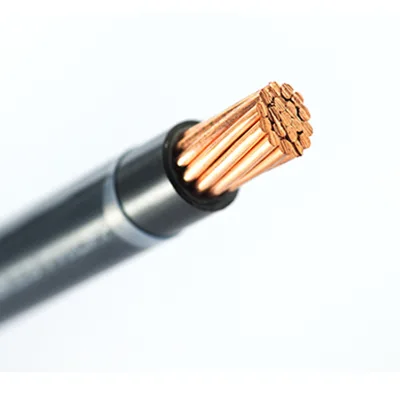
When sourcing building THHN and THWN electrical wire, buyers must first establish a precise understanding of the technical architecture that defines these products. The core keyword "building thhn thwn electrical wire" refers to a specific class of insulated conductors designed for general building wiring applications. The primary distinction lies in the insulation and jacketing materials, which dictate the environmental suitability of the wire. Based on observed product attributes, the insulation material is predominantly Polyvinyl Chloride (PVC), providing a robust barrier against moisture and chemicals. The outer sheath often incorporates a Nylon jacket, which serves as a protective layer against abrasion, oil, and moisture, a critical feature for THHN (Thermoplastic High Heat-resistant Nylon-coated) and THWN (Thermoplastic Heat and Water-resistant Nylon-coated) cables.
The conductor material is a pivotal specification that directly influences conductivity, flexibility, and cost. The available market data indicates that conductors are manufactured using either Copper or Aluminum. Specifically, the supply chain offers options for Solid or Stranded Copper, as well as Bare Copper Wire or AA-8000 Aluminum Alloy. Stranded conductors are frequently observed in the 14AWG to 1000kcmil range, offering superior flexibility for complex installations, while solid conductors are typically found in smaller gauges. The cross-section range is extensive, spanning from 14AWG up to 1000kcmil, with specific listings noting intermediate sizes such as 12AWG, 10AWG, 8AWG, and 6AWG. This wide spectrum allows procurement teams to source wire for everything from residential lighting circuits to heavy industrial power distribution.
Voltage ratings are another non-negotiable technical parameter. The observed specifications consistently list a voltage rating of 600V, which is the standard for most building wiring applications in North America. Temperature ratings are equally critical; the data points to a maximum operating temperature of 75°C in both dry and wet locations. This thermal rating ensures the insulation maintains its integrity under standard load conditions without degrading prematurely. Buyers should verify that the specific lot they procure matches these thermal and voltage constraints, as deviations can lead to safety hazards or code violations. The physical shape of the wire is consistently round, and the core configuration is typically single, though multi-core cables may be available depending on the specific model number requested.
Compliance Verification and Certification Standards
In the electrical wire sector, compliance is not merely a formality but a prerequisite for market entry and safety assurance. The sourcing guide emphasizes that buyers must rigorously verify the certification status of any supplier. The observed product data highlights several key certifications, including UL (Underwriters Laboratories), VDE (Verband der Elektrotechnik), RoHS (Restriction of Hazardous Substances), CCC (China Compulsory Certification), CE (Conformité Européenne), and ISO standards. The presence of a UL certificate is particularly significant, as THHN/THWN wire is often required to meet UL 83 standards for building wire.
When evaluating a supplier, the buyer must demand proof of these certifications rather than relying on marketing claims. The standard UL 83 is explicitly mentioned in the product attributes as the governing standard for THHN cable wire. However, it is important to note that while UL is a dominant standard, other standards such as UL 1007 or UL 1185 may apply to different wire types or applications, though the specific context of this guide focuses on the 83 standard for building wire. The presence of RoHS and CE certifications indicates compliance with environmental regulations regarding hazardous substances and European safety requirements, respectively.
Buyers should be cautious of "low-confidence" background information regarding standards like UL 1426 or UL 1061, which may not apply to general building wire and could indicate a mismatch in product categorization. The verification process should involve requesting current, valid certificates from the manufacturer that explicitly list the product model and the specific standard (e.g., UL 83) covered. Additionally, the origin of the product, often listed as Hebei, China, or generally China, should be cross-referenced with the certification body's scope. A certificate issued by a recognized body for a product manufactured in a specific region adds a layer of authenticity that protects the buyer from counterfeit goods.
Cost Drivers and Pricing Structure Analysis
The pricing of THHN/THWN wire is dynamic and influenced by several macro and micro factors. The observed price range in the market spans from $0.01 to $999, a vast spectrum that reflects the difference between small sample quantities and bulk industrial orders. The "Factory Price" is frequently cited as a selling point, suggesting that direct sourcing from the manufacturer can yield significant cost savings compared to purchasing through intermediaries. However, the final cost is heavily dependent on the conductor material. Copper is generally more expensive than aluminum, and the choice between solid and stranded configurations can also impact the price due to differences in manufacturing complexity and material usage.
The Minimum Order Quantity (MOQ) is another critical cost driver. The observed MOQ range is 1 to 10,000 units, indicating that suppliers are flexible but may impose higher per-unit costs for smaller orders. For large-scale building projects, negotiating an MOQ closer to the upper limit can result in better economies of scale. The packing method also influences the total landed cost. Options include "Soft Packing," "Standard Package," or "Soft Packing in Coil" with specific lengths like 100m/Roll. Customization requests, such as specific packaging or labeling, may incur additional fees, as noted by the "Customization: Available" attribute.
Buyers should also consider the lead time and delivery terms. The data indicates that delivery is "as Per Order," which implies that lead times are variable and dependent on production schedules and order volume. While no specific lead time is guaranteed in the general data, buyers should expect that larger orders or custom specifications will require longer production windows. The "Free Sample" attribute offers a low-risk opportunity to verify quality before committing to a large purchase, which can be a strategic move to avoid costly mistakes in material selection.
Typical Applications and Environmental Suitability
THHN and THWN wires are versatile solutions designed for a wide array of building applications. The observed attributes list applications including heating, overhead, and underground installations. This versatility makes them a staple in residential, commercial, and industrial construction. The "Heating" application suggests suitability for use in heating systems, while "Overhead" and "Underground" indicate the wire's ability to withstand environmental exposure when properly installed in conduit or raceways.
The "Range of Application" attributes, such as "Flame Retardant" and "LSOH" (Low Smoke Zero Halogen), highlight the safety features of the insulation. Flame retardant properties are essential for building codes that aim to prevent the spread of fire within walls and ceilings. LSOH materials are particularly valuable in confined spaces or public buildings where smoke and toxic fume generation during a fire must be minimized. The Nylon sheath provides additional protection against moisture and abrasion, making the wire suitable for wet locations, a key requirement for THWN-rated cables.
Buyers must ensure that the selected wire matches the specific environmental conditions of the project. For instance, while the wire is rated for wet locations, the installation method (e.g., direct burial vs. conduit) must align with the manufacturer's specifications. The voltage rating of 600V makes it suitable for most standard building circuits, but high-voltage industrial applications may require different specifications. Understanding these application nuances ensures that the procured wire performs reliably throughout its lifecycle, reducing the risk of premature failure or code non-compliance.
Supplier Evaluation and Quality Control Protocols
Evaluating a supplier for THHN/THWN wire requires a multi-faceted approach that goes beyond price comparison. The "Location" attribute, often pointing to Hebei, China, suggests a concentration of manufacturing in specific industrial hubs. Buyers should verify the supplier's physical presence and production capacity in these regions. A robust supplier evaluation should include a review of their quality control processes, ensuring they adhere to the stated standards like UL 83 and ISO.
Quality control should be a continuous process, not just a final inspection. Buyers should request documentation of internal testing procedures, including resistance testing, insulation resistance, and tensile strength tests. The "Sample: Free" attribute can be leveraged to conduct independent laboratory testing before placing a large order. This step is crucial for verifying that the conductor material is indeed Copper or Aluminum as claimed and that the insulation thickness meets the required specifications.
Furthermore, the "Customization: Available" attribute indicates that suppliers are capable of tailoring products to specific needs. However, this flexibility must be managed carefully to ensure that customization does not compromise the core safety standards. Buyers should establish clear communication channels with suppliers to define quality expectations, including acceptable tolerances for wire diameter, insulation thickness, and color coding. Regular audits and site visits, if feasible, can provide additional assurance of the supplier's commitment to quality and compliance.
Long-Term Procurement and Supply Chain Resilience
Sourcing building wire is a long-term commitment that requires strategic planning to ensure supply chain resilience. The "Delivery: as Per Order" note suggests that lead times can vary, making it essential for buyers to maintain a buffer stock or establish a reliable reorder cycle. The wide range of cross-sections available, from 14AWG to 1000kcmil, means that a single supplier may not stock every size in high volume. Buyers should assess the supplier's inventory management capabilities to ensure they can fulfill orders for less common gauges without significant delays.
The "Standard Package" and "Soft Packing" options offer flexibility in logistics, but buyers should consider the impact of packaging on storage and handling. Proper packaging prevents damage during transit and storage, which is critical for maintaining the integrity of the insulation and conductor. Additionally, the "Price: Factory Price" attribute suggests that direct relationships with manufacturers can offer better pricing stability over time. However, buyers should remain vigilant about market fluctuations in raw material costs, particularly copper, which can significantly impact the final price of the wire.
Long-term procurement strategies should also include a focus on sustainability and compliance with evolving environmental regulations. The presence of RoHS and CE certifications indicates that the supplier is aware of global environmental standards. Buyers should encourage suppliers to stay ahead of regulatory changes, such as updates to flame retardancy requirements or new restrictions on hazardous materials. By building a partnership based on transparency, quality, and compliance, buyers can secure a reliable supply of THHN/THWN wire that meets the demands of modern building projects.
Comparative Analysis of Product Attributes
To assist buyers in making informed decisions, the following table summarizes the key product attributes observed in the market for THHN/THWN electrical wire. This comparison highlights the variability in specifications and helps identify the critical factors that should be verified during the sourcing process.
| Attribute Category | Observed Specifications | Verification Requirement |
|---|---|---|
| Conductor Material | Copper, Aluminum, AA-8000 Alloy | Confirm material grade and purity via test reports. |
| Conductor Type | Solid, Stranded | Match to installation flexibility needs. |
| Insulation Material | PVC | Verify thickness and flame retardancy rating. |
| Sheath Material | Nylon | Check for abrasion and moisture resistance. |
| Voltage Rating | 600V | Ensure compliance with project voltage requirements. |
| Temperature Rating | 75°C (Dry/Wet) | Confirm suitability for ambient conditions. |
| Cross Section | 14AWG - 1000kcmil | Verify specific gauge availability and tolerance. |
| Certifications | UL, VDE, RoHS, CCC, CE, ISO | Request valid, current certificates for the specific model. |
| Standard | UL 83 | Confirm the product meets the specific building code standard. |
| Origin | Hebei, China / General China | Verify factory location and export compliance. |
| Packing | Soft, Standard, Coil (100m/Roll) | Assess packaging for transport safety and storage. |
| MOQ | 1 - 10,000 | Negotiate based on project volume and budget. |
This table serves as a checklist for buyers to ensure that all critical technical and compliance aspects are addressed before finalizing a procurement contract. By systematically verifying each attribute, buyers can mitigate risks and secure high-quality THHN/THWN wire that meets the rigorous demands of building construction.
FAQs
What certifications are available for building thhn thwn electrical wire?
Available certifications include UL, VDE, RoHS, CCC, CE, and ISO. These standards ensure the wire meets safety and environmental requirements for various global markets and applications.
Which conductor materials are used in building thhn thwn electrical wire?
Conductors are made from copper or aluminum, including solid or stranded configurations. Specific options also include bare copper wire or AA-8000 aluminum alloy for diverse electrical needs.
Can I get free samples of building thhn thwn electrical wire?
Yes, free samples are available for verification before bulk orders. This allows buyers to test quality and specifications like insulation material and cross-section before committing to large quantities.
What is the voltage rating for building thhn thwn electrical wire?
The standard voltage rating is 600V for most building applications. This rating supports general wiring needs while ensuring safety in both dry and wet locations up to 75°C.
How is building thhn thwn electrical wire typically packaged?
Packaging options include soft packing, standard packages, or coils of 100m per roll. Custom packing requests are also available to meet specific logistical or project requirements.
What is the origin of building thhn thwn electrical wire?
Products originate from Hebei, China, or generally China. Buyers should verify specific factory locations to ensure compliance with shipping terms and quality control standards.
Which cross-section sizes are available for building thhn thwn electrical wire?
Available sizes range from 14AWG up to 1000kcmil, including 12AWG, 10AWG, 8AWG, and 6AWG. This wide range supports applications from residential lighting to heavy industrial power distribution.